
01102060500

info@eotss-academy.com

ADD TO CART
( Item: 0 )

Cart

No products in the basket.

⚑ Low Current Systems

Wishlist Share
Share Course
Page Link
Share On Social Media

About Course

πŸ“Œ Training Course Plan: Low Current Systems ⚑
πŸ“… Duration: 4 Weeks (8 Lectures)

Code: 12002-NC

⚑ Low Current Systems – Description & General Information

πŸ“Œ What are Low Current Systems?

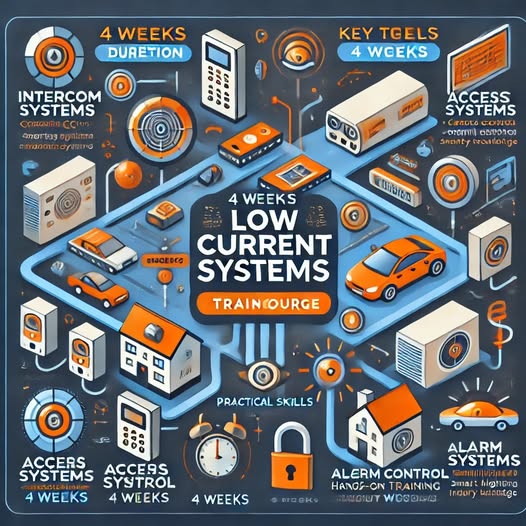
Low Current Systems refer to electrical and electronic systems that operate on low voltage and low power consumption. These systems are essential in modern buildings, infrastructure, and industrial applications, ensuring automation, security, communication, and efficiency.


πŸ” General Information

Low Current Systems are widely used in commercial, industrial, and residential environments. They typically operate on voltages ranging from 12V to 48V and are designed for safety, reliability, and energy efficiency. These systems include various technologies that support security, data transmission, fire detection, automation, and entertainment.


βš™οΈ Key Low Current Systems Include:

1️⃣ Structured Cabling Systems (SCS) – Network and data cabling infrastructure for communication.
2️⃣ Fire Alarm Systems – Detection and notification systems for fire hazards.
3️⃣ CCTV & Surveillance Systems – Security camera and monitoring solutions.
4️⃣ Access Control Systems – Electronic keycards, biometric access, and security doors.
5️⃣ Public Address & Voice Alarm Systems (PA/VA) – Audio communication systems for announcements and emergency alerts.
6️⃣ Intrusion Detection Systems (IDS) – Motion sensors and alarms for security threats.
7️⃣ Audio-Visual (AV) Systems – Smart conference rooms, home automation, and digital signage.
8️⃣ Intercom & Telephone Systems – Communication systems for buildings and industrial environments.
9️⃣ Building Management Systems (BMS) – Smart automation for HVAC, lighting, and energy management.


🏒 Applications of Low Current Systems

βœ… Commercial Buildings – Office automation, security, and communications.
βœ… Industrial Facilities – Factory monitoring, fire safety, and process control.
βœ… Hospitals & Healthcare – Emergency alert systems, nurse call systems.
βœ… Hotels & Residential Complexes – Smart home automation, intercoms, security systems.
βœ… Educational Institutions – Campus security, public address systems, networking solutions.


πŸš€ Why are Low Current Systems Important?

πŸ”Ή Enhance safety and security in buildings and industrial environments.
πŸ”Ή Improve efficiency with automation and intelligent monitoring.
πŸ”Ή Enable seamless communication within workplaces and public areas.
πŸ”Ή Support energy savings and sustainability with smart controls.
πŸ”Ή Provide high-tech convenience in modern infrastructure.

Low Current Systems are the backbone of smart and secure environments, making them crucial in today’s interconnected world! πŸŒπŸ’‘

🎯 Target Audience:

Electrical engineers and technicians
Electrical and communications engineering students
Professionals in security and surveillance systems
πŸ“– Detailed Course Content

πŸ‘¨β€πŸ« Week 1: Introduction to Low Current Systems
πŸ“Œ Lecture 1: Concept and Applications of Low Current Systems

Difference between low and high current systems
Importance of low current systems in infrastructure
Main applications (control, security, communications)
πŸ“Œ Lecture 2: Intercom and Voice Communication Systems

Components of intercom systems
Wired and wireless connection methods
Troubleshooting and common maintenance issues
πŸ“Š Week 2: Security and Surveillance Systems
πŸ“Œ Lecture 3: CCTV Surveillance Systems

Types of cameras (Analog vs. IP)
Connection techniques and communication protocols
Data storage and DVR/NVR recording systems
πŸ“Œ Lecture 4: Access Control Systems

Mechanism of door access control systems
Types of readers (RFID, biometric, smart keys)
System integration with networks
πŸ› οΈ Week 3: Alarm Systems and Smart Lighting
πŸ“Œ Lecture 5: Burglar and Fire Alarm Systems

Components of alarm systems and sensor types
Conventional vs. smart alarm systems
Wiring methods and integration with other systems
πŸ“Œ Lecture 6: Smart Lighting and Automated Control

Smart lighting technologies (Zigbee, KNX, DALI)
Integration with smart home systems
Case studies of automated control systems
πŸš€ Week 4: Design, Implementation, and Maintenance
πŸ“Œ Lecture 7: Planning and Designing Low Current Systems

Reading engineering schematics and symbols
Power and load calculations for low current systems
Selecting appropriate components for each application
πŸ“Œ Lecture 8: Installation and Practical Maintenance

Field installation and testing of systems
Common faults and troubleshooting methods
Performance optimization and sustainability
🎯 Course Outcomes:
βœ… Comprehensive understanding of low current systems and applications
βœ… Mastery in designing and installing intercom, surveillance, alarm, and smart lighting systems
βœ… Knowledge of maintenance and troubleshooting for optimal operation
βœ… Readiness for the job market in the field of low-voltage electrical systems

Show More

What Will You Learn?

  • 🎯 What Will I Learn?
  • By the end of this Low Current Systems course, you will gain:
  • πŸ”Ή Comprehensive Understanding of Low Current Systems
  • βœ… The fundamentals of Low Current Systems and their role in modern infrastructure.
  • βœ… The differences between low current vs. high current electrical systems.
  • πŸ”Ή Technical Knowledge & System Components
  • βœ… The key components and design principles of:
  • Structured Cabling Systems (SCS)
  • Fire Alarm Systems
  • CCTV & Surveillance Systems
  • Access Control & Security Systems
  • Public Address & Voice Alarm (PA/VA) Systems
  • Intercom & Telephone Systems
  • Building Management Systems (BMS)
  • πŸ”Ή Installation & Configuration Skills
  • βœ… How to design, install, and configure various Low Current Systems.
  • βœ… Best practices for cable management and network infrastructure.
  • βœ… System integration with BMS, security, and automation technologies.
  • πŸ”Ή Testing & Troubleshooting
  • βœ… How to test Low Current Systems for performance and compliance.
  • βœ… Diagnosing and troubleshooting common issues in security, fire alarm, and networking systems.
  • πŸ”Ή Industry Standards & Best Practices
  • βœ… Understanding global standards like TIA/EIA, ISO, NEC, NFPA, and more.
  • βœ… Compliance with safety regulations and system reliability measures.
  • πŸ”Ή Hands-On Projects & Real-World Applications
  • βœ… Practical experience in designing and implementing a complete Low Current System.
  • βœ… Working on real-world case studies in commercial, industrial, and residential settings.
  • This course equips you with the technical expertise and hands-on skills needed to excel in the field of Low Current Systems engineering! πŸš€πŸ’‘

Student Ratings & Reviews

No Review Yet
No Review Yet